
Types of Router Bits: What They Do and Which One to Use
Open a box of router bits and, if you are still getting familiar with them, it can be hard to know where to start. At first glance, many of them look like slightly different versions of the same tool, but each profile is designed for a particular type of cut. A straight router bit used to cut a groove has a very different job to a round-over or radius bit shaping the edge of a tabletop. A flush-trim bit is commonly used for edge and template-guided trimming, while joining bits are designed to help create specific timber connections.
The easiest way to understand the different types of router bits is to start with the result you want to achieve. Do you need to cut a groove, shape an edge, create a joint or trim one surface flush with another?
Understanding Router Bit Profiles
A router bit profile is simply the shape the cutter creates in the timber. A straight bit creates a straight-sided cut, a round-over or radius bit creates a curved edge, a cove bit cuts an inward curve and a Vee Groove Bit creates a V-shaped channel. That relationship between the shape of the cutter and the shape left behind is the most useful thing to understand when comparing router bit profiles.
Straight Router Bits
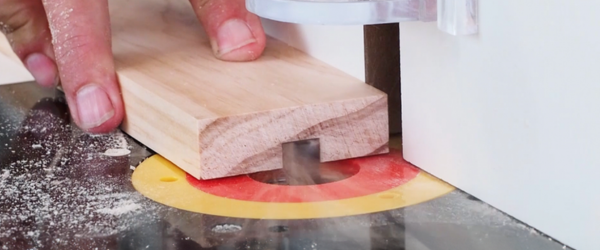
Straight router bits are one of the more versatile options in the workshop. As the name suggests, they create straight-sided cuts rather than shaped edge profiles.
They can be used for grooves, dados, recesses and general material removal, while suitable straight cutters are also available for mortising applications. If you are fitting a shelf into the side of a cabinet, for example, you may need a clean groove for the shelf to sit into. You might also use a straight bit to create a recess for hardware that needs to sit below the surface of the timber.
Edge and Face Forming Router Bits
Edge and face forming bits are used when you want to shape the edge or face of timber rather than simply cut a straight groove through it.
This might be as simple as softening a sharp corner on a shelf or creating a more defined decorative profile on a furniture or cabinetry component.
Round-Over or Radius Bits
Carbitool’s range includes several radius bits for creating curved profiles on timber edges. These cutters can be used on furniture, shelving, benchtops, cabinetry and other exposed edges where a rounded finish is wanted. Depending on the cutter and setup, the result might be a subtle radius or a much more noticeable curved profile.
Chamfer Bits
Chamfer bits create an angled edge rather than a curve. They can be used to remove a sharp corner, create a bevel or add a clean geometric detail to a piece of timber.
A shallow chamfer can be quite understated, while a deeper cut can become a more deliberate part of the design. This makes chamfer bits useful across furniture, shelving, cabinetry and decorative woodworking.
Cove Bits
A cove bit creates an inward, concave curve. It can be used for furniture edges, mouldings and decorative details where an inward profile suits the design.
Cove and radius bits are both curved cutters, but they create very different finished shapes. This is a good example of why looking at router bit profiles rather than simply the name of the cutter can make choosing between them easier.
Vee Groove Bits
Carbitool refers to these as Vee Groove Bits, while you may also see them described more generally as V-groove bits. They cut a V-shaped channel into the face or edge of the material and can be used for decorative grooves, lettering, detailing and other applications where a defined line or channel is required. Together, these cutters provide a broad selection of router edge profiles, from simple rounded and angled edges through to more decorative shapes.
Joining Router Bits
Some router bits are designed specifically to help create timber joints rather than decorative profiles. Joining router bits cut shapes that allow two pieces of material to come together in a particular way. Depending on the cutter, this might include tongue-and-groove joints, finger joints, mitre-lock joints and other forms of timber joinery. These types of bits can be useful in cabinetry, furniture making, panel work and other projects where the same joint needs to be produced consistently. Setup is particularly important with joining bits because cutter height, fence position, material thickness and router setup all affect how the two pieces meet.
Other Router Bit Types Worth Knowing
There are plenty of other router bit types designed for more specific jobs. You may not need all of them, but understanding what they do can make it easier to recognise when a particular cutter suits the project in front of you.
Flush-Trim Bits
Flush-trim bits are commonly used for template work and edge trimming. A bearing follows an existing edge or template while the cutter removes the excess material alongside it. This can be useful when producing repeated components or when one surface needs to be trimmed so it matches another. If you are making several identical parts, for example, a template and flush-trim bit can help reproduce the same shape consistently.
Rebating Bits
A rebating bit creates a stepped recess along the edge of the material. Rebates are used across cabinetry, furniture, frames and other projects where one component needs to sit into or overlap another. Dedicated rebating cutters can be useful where this type of profile needs to be produced consistently across several components.
Laminate Trim Bits
Laminate trim bits and cutters are designed for trimming laminate and similar materials around the edge of a finished surface. Rather than trying to cut the laminate perfectly to size before it is applied, it can be left slightly oversized and then trimmed back to the finished edge afterwards. For benchtops, cabinetry and laminated panels, this can make the finishing process more manageable.
How to Choose the Right Router Bit
Choosing the right router bit usually starts with the cut you want to make. If you need a straight groove, that points you towards one group of cutters. If you are shaping an exposed edge, an edge-forming profile may be more suitable. If you are creating a timber connection, a joining bit may be worth considering.
The material you are working with also matters. Solid timber, sheet materials, laminate and other substrates can all have different requirements, so it is worth checking that the cutter is suitable for both the material and the application.
Which Router Bits Are Best for Beginners?
There is no single set of best router bits for beginners because it depends on the type of work you want to do.
Someone building cabinets may use different cutters to someone making furniture or working mainly with templates. Straight bits can be a practical starting point for many general routing jobs because they can be used for grooves, recesses and material removal.
Build the Right Router Bit Selection for Your Work
There are many types of router bits, but understanding them becomes much easier when you start with the finished result. A groove, rounded edge, bevel, decorative profile or timber joint will each point you towards a different type of cutter. From there, you can look at the material, size, router setup and finish required to narrow down the options.
Carbitool offers a broad range of router bits across different profiles, sizes and applications for cabinetry, furniture making, joinery and general woodworking.